
A contemporary take on an iconic flat
Larissa, Barbican Estate EC2Y
Designed for past, present and future
After starting renovations on her four-story Barbican Estate flat, Larissa discovered the kitchen we designed for fellow residents Mariana and Adam. An architect herself, she felt we would be the perfect choice to transform her third floor, the main open-plan family living area.
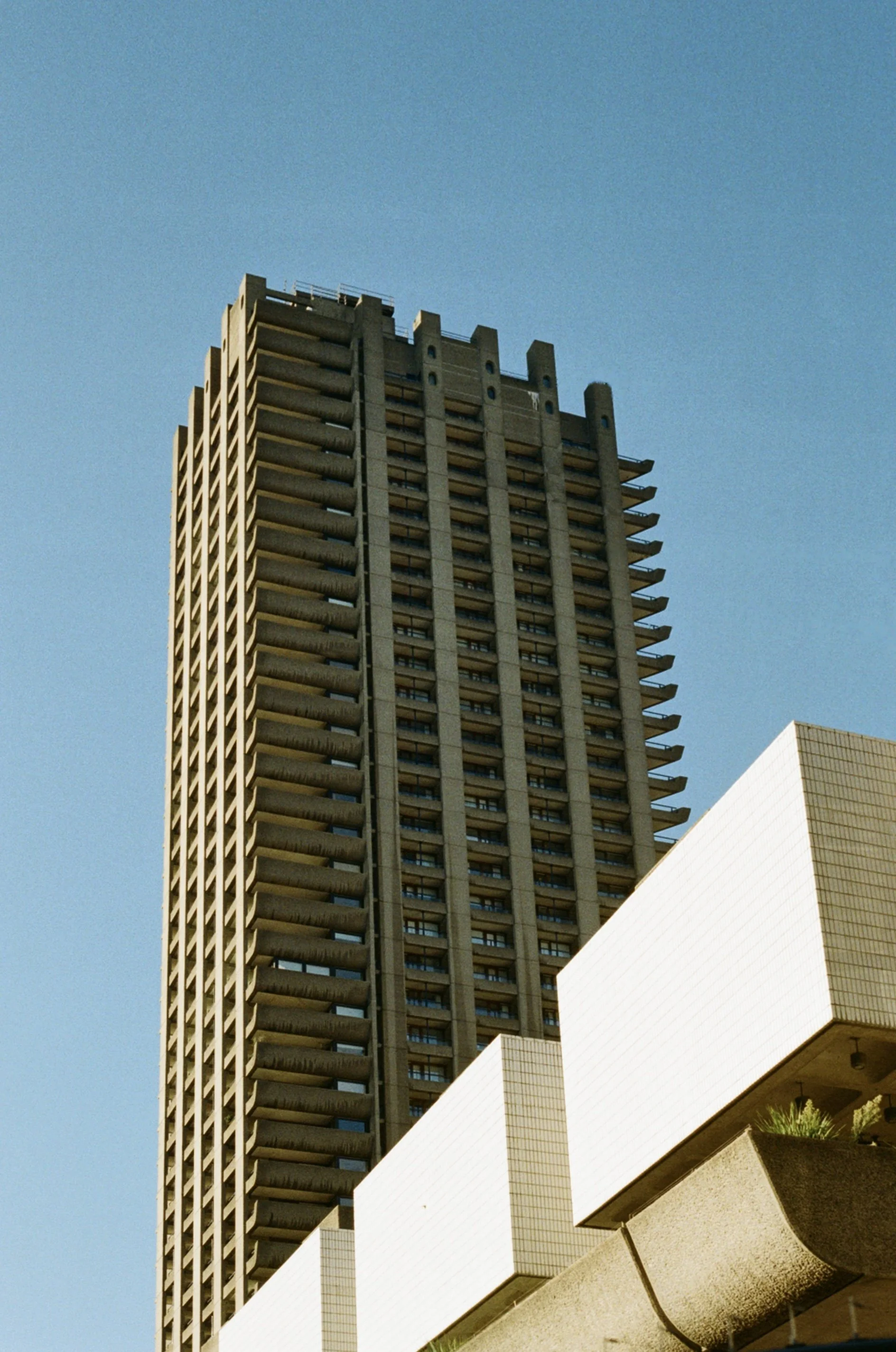
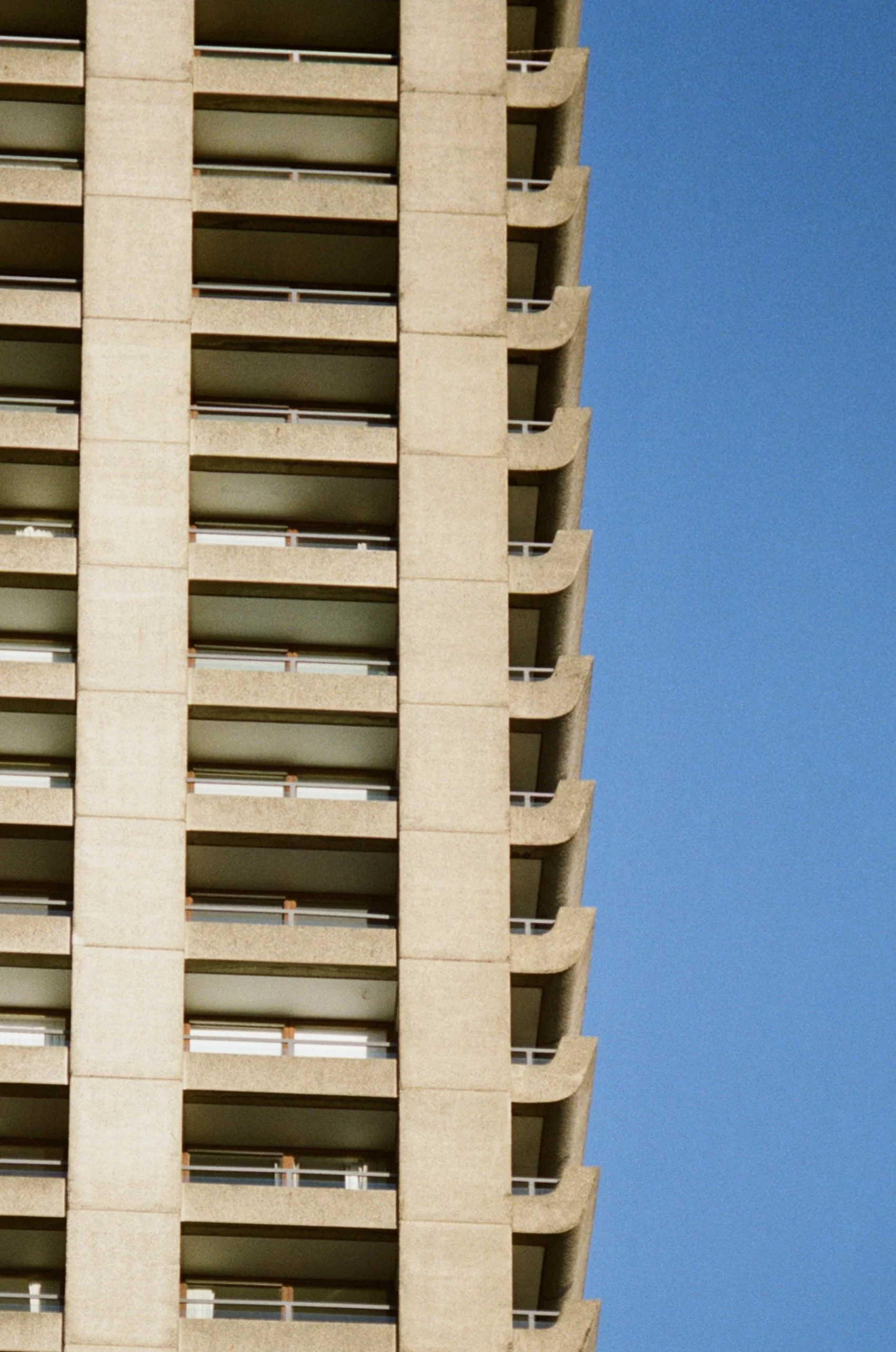
The iconic Barbican Estate is a world-renowned Brutalist masterpiece, a status that brings specific design challenges. As a Grade 2 listed building, its architecture demands a consistently high standard of design, requiring a careful balance between respecting the original vision and designing for contemporary life. Rather than seeing these limitations as constraints, we embraced them as our primary inspiration. This approach allowed us to weave a coherent design narrative throughout the space, one that pays homage to not only the aesthetics but also the philosophy of the original architects.
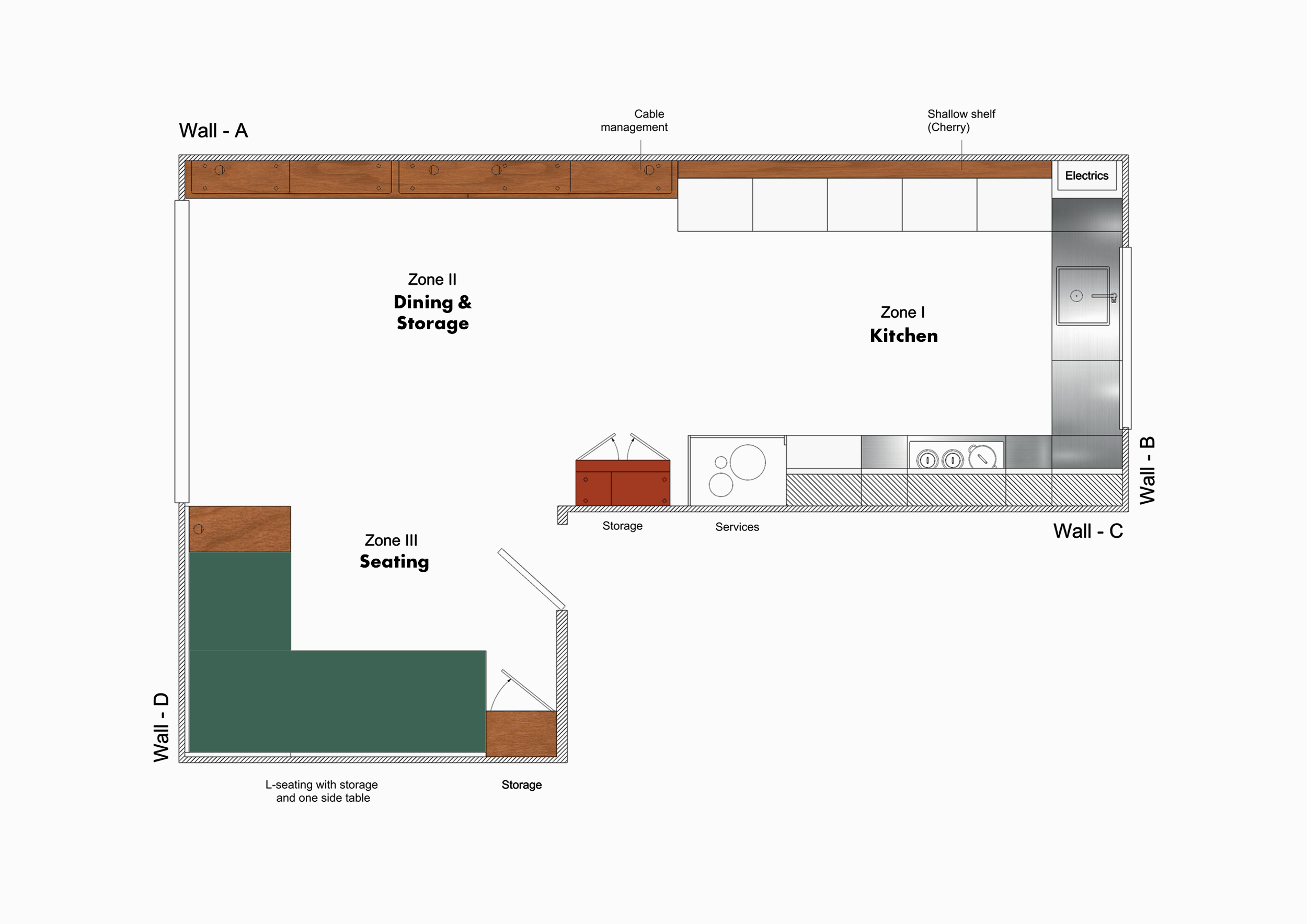
To adapt the space for modern family life, we split it into three distinct zones. Each area has a defined purpose and a clear visual personality, allowing the home to effortlessly transition from daily family demands to entertaining, creating a peaceful haven at the heart of the home.
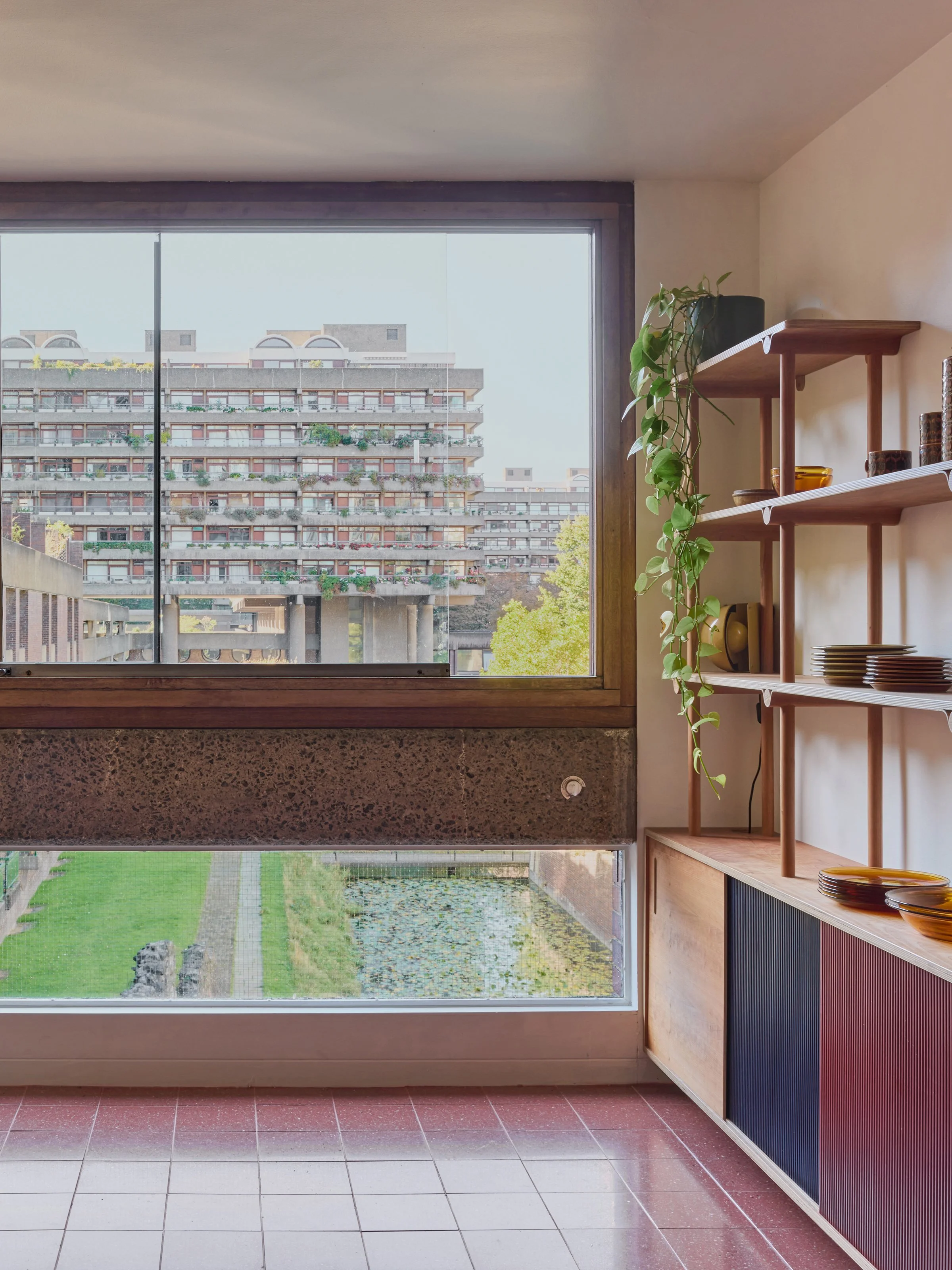
Inspired by the Barbican itself
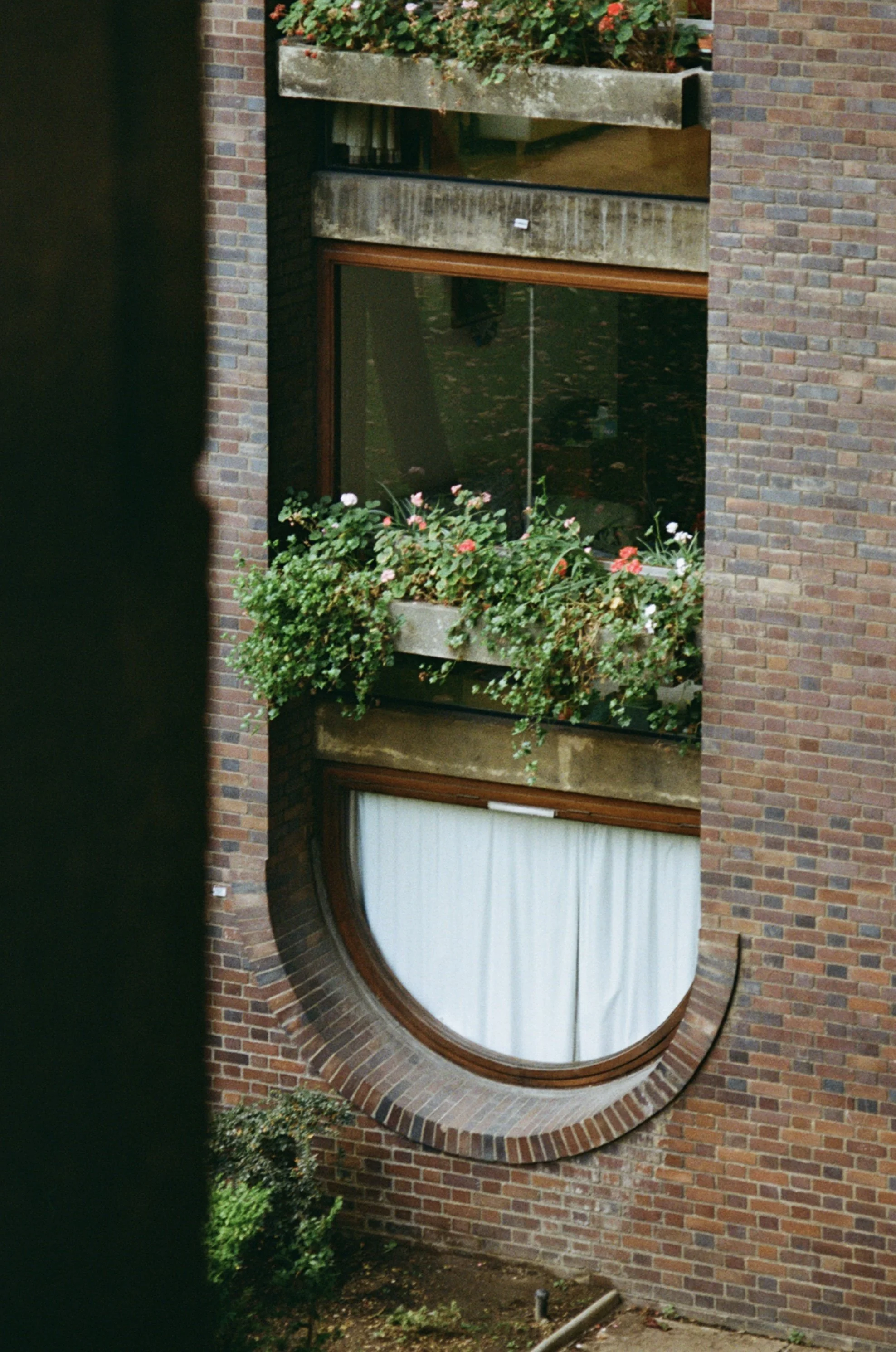
Inspired by the original 1960s window frame — a strong visual centre point with concrete detailing and a sprawling estate view — we wanted to capture the original architect's vision of longevity, creating pieces built to last for decades.
We structured the space into three distinct zones: seating, dining/storage, and kitchen. The original room has a geometric and boxy layout so we introduced joyful, balancing curved elements like our wave joint and ensured each piece is designed to accommodate the space’s existing quirks and recesses. To manage the low ceilings, we opted for a low-slung sofa and kept storage either open-plan or shallow, ensuring the space feels fitted and uncluttered rather than overloaded.
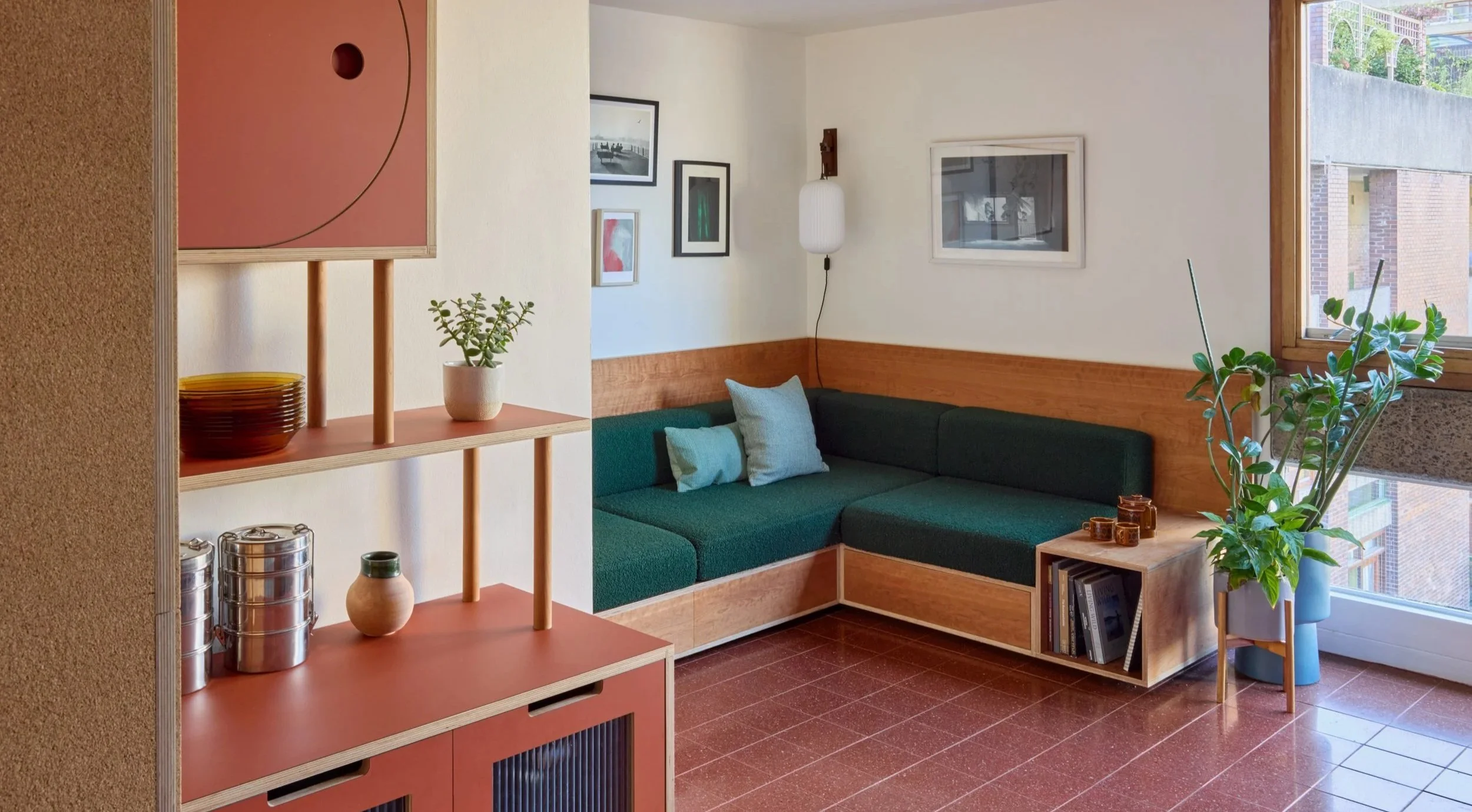
Mirroring the diverse forms and textures present in the Barbican's architecture, we delineated each zone thanks to distinct and contrasting materials, from soft boucle fabric to sleek stainless steel, all tied together by a light reflecting terrazzo floor tile throughout.
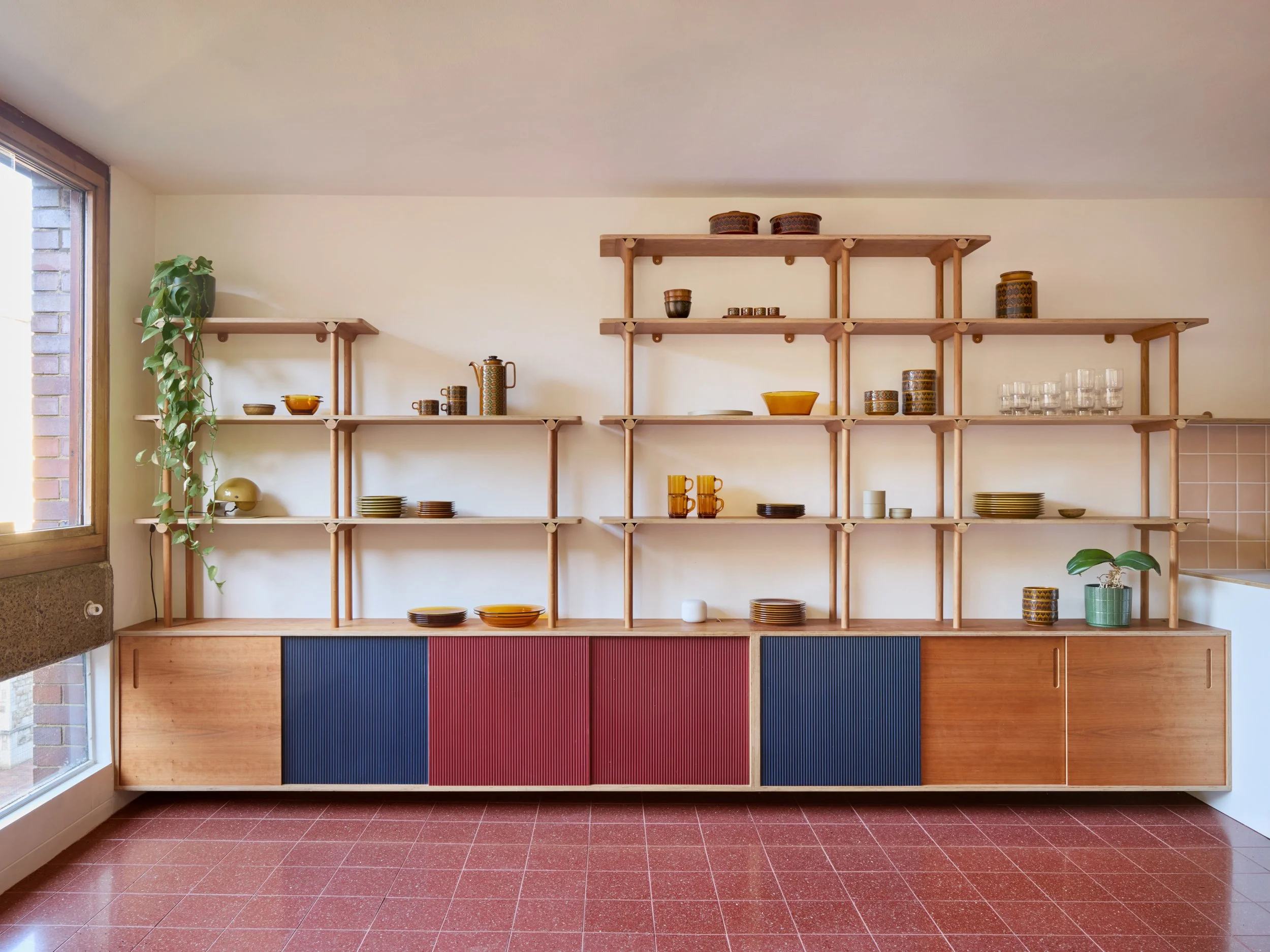
Sideboard and dining zone
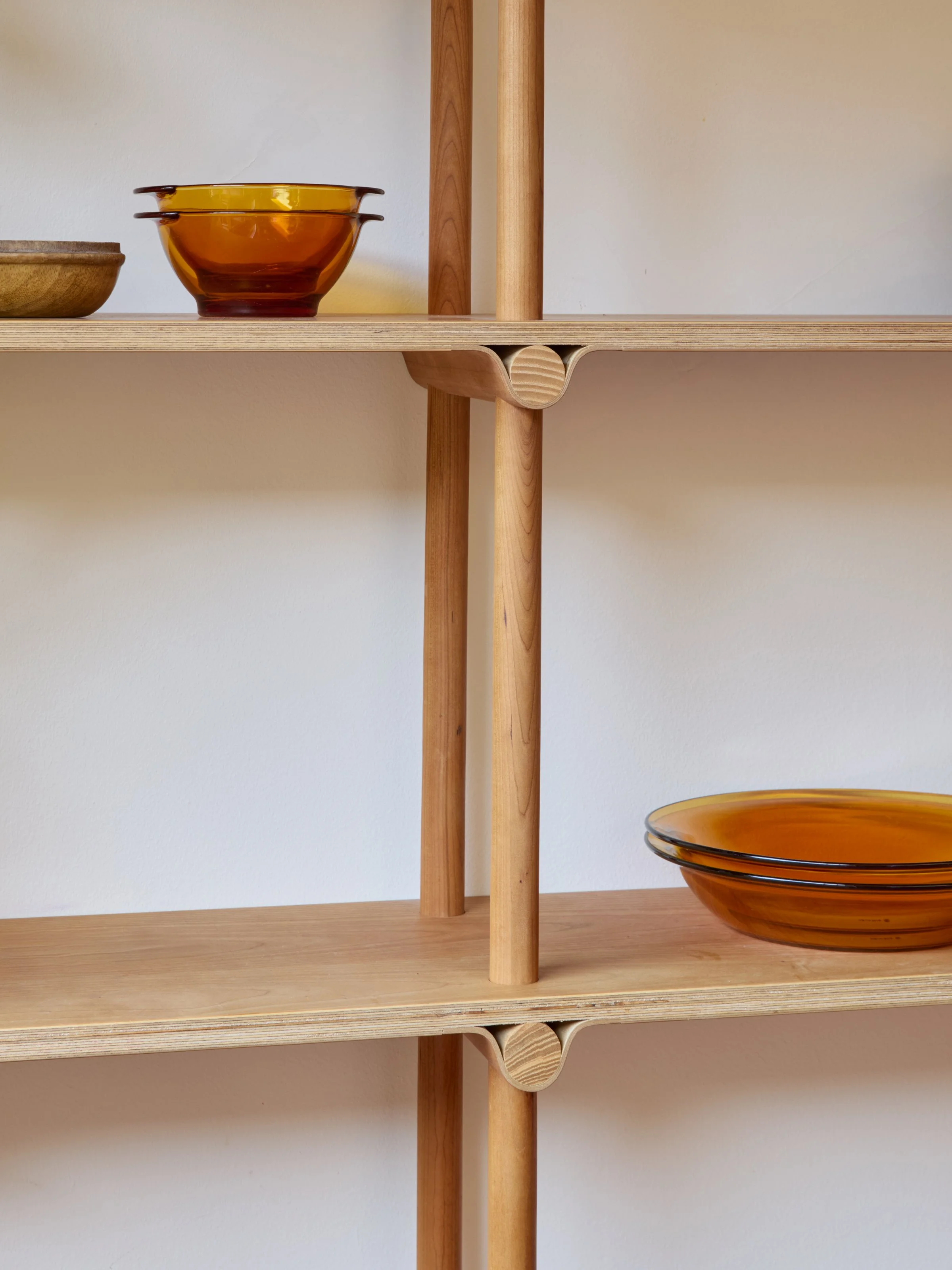
In the dining area, we designed a larger iteration of our signature sideboard with open plan wave shelving. This wall-mounted piece, with painted sliding doors in colours that are picked up in other details around the room, provides ample, concealed storage.
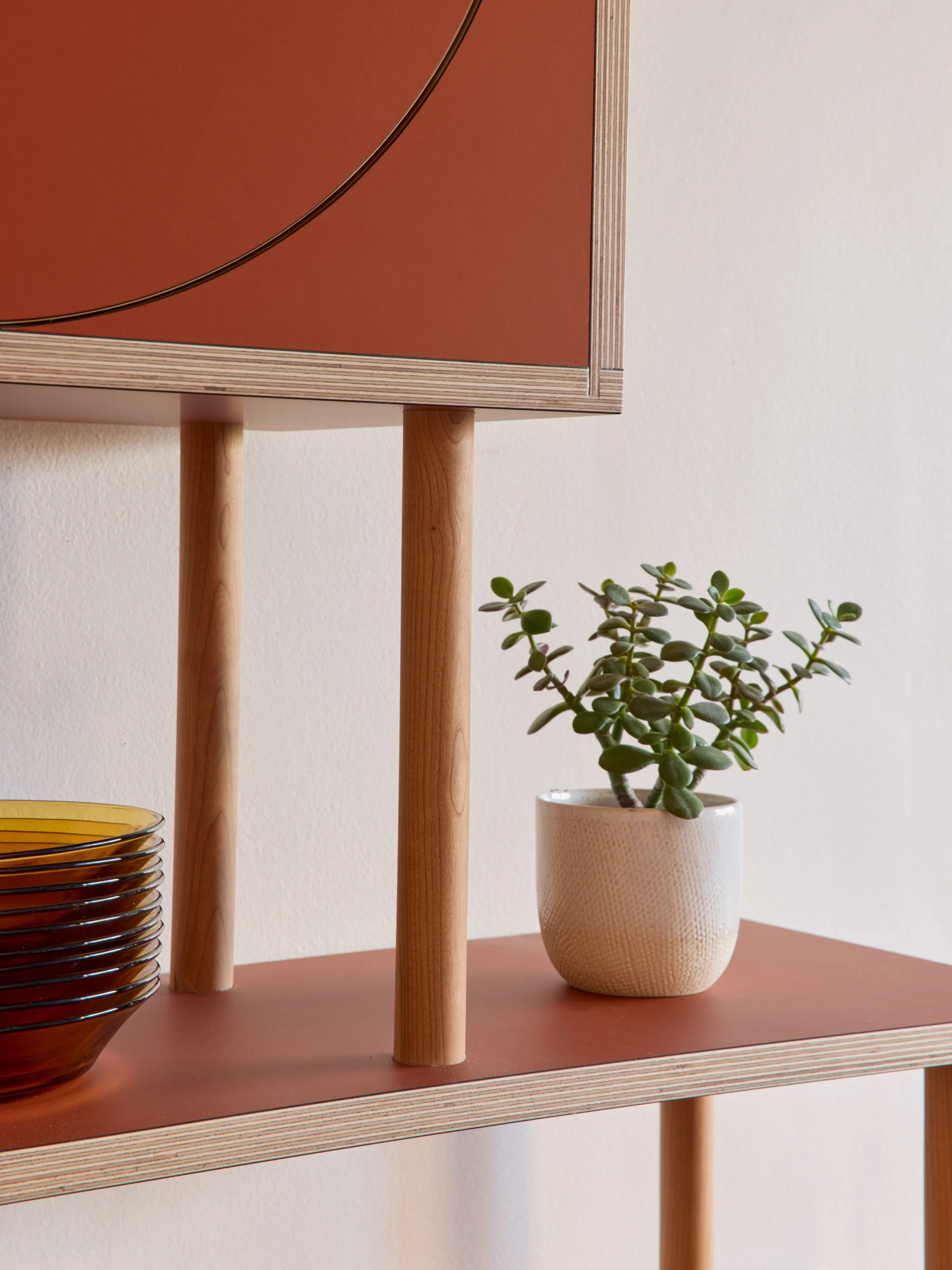
Designed to be slightly shallower than the sideboard, the shelves are laid out in a considered asymmetrical design with carefully placed gaps giving it rhythm and breathing space. Furthermore, several built-in holes for cable management on the sideboard's top and between the internal sections ensure a clean, tech-savvy finish.
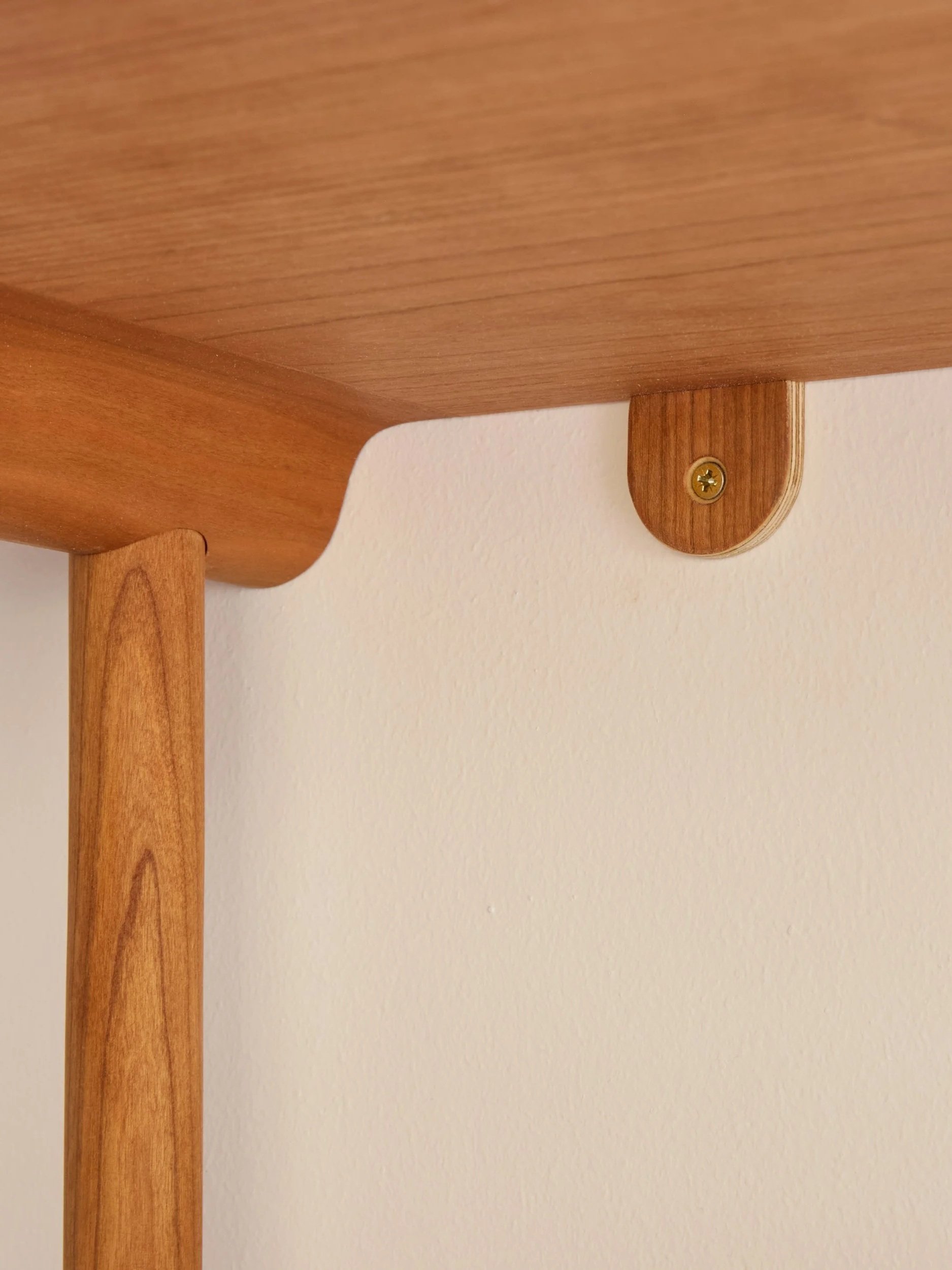
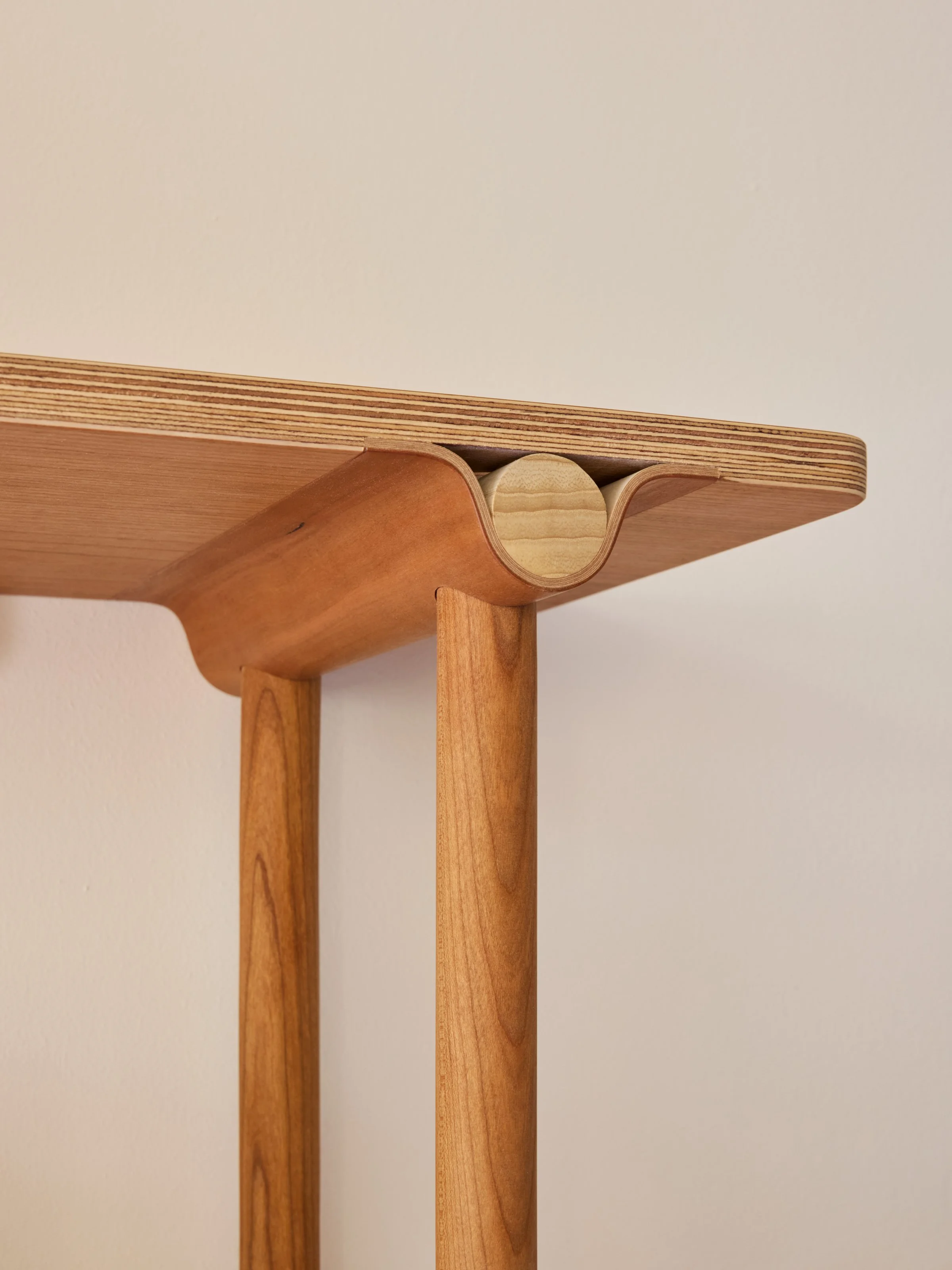
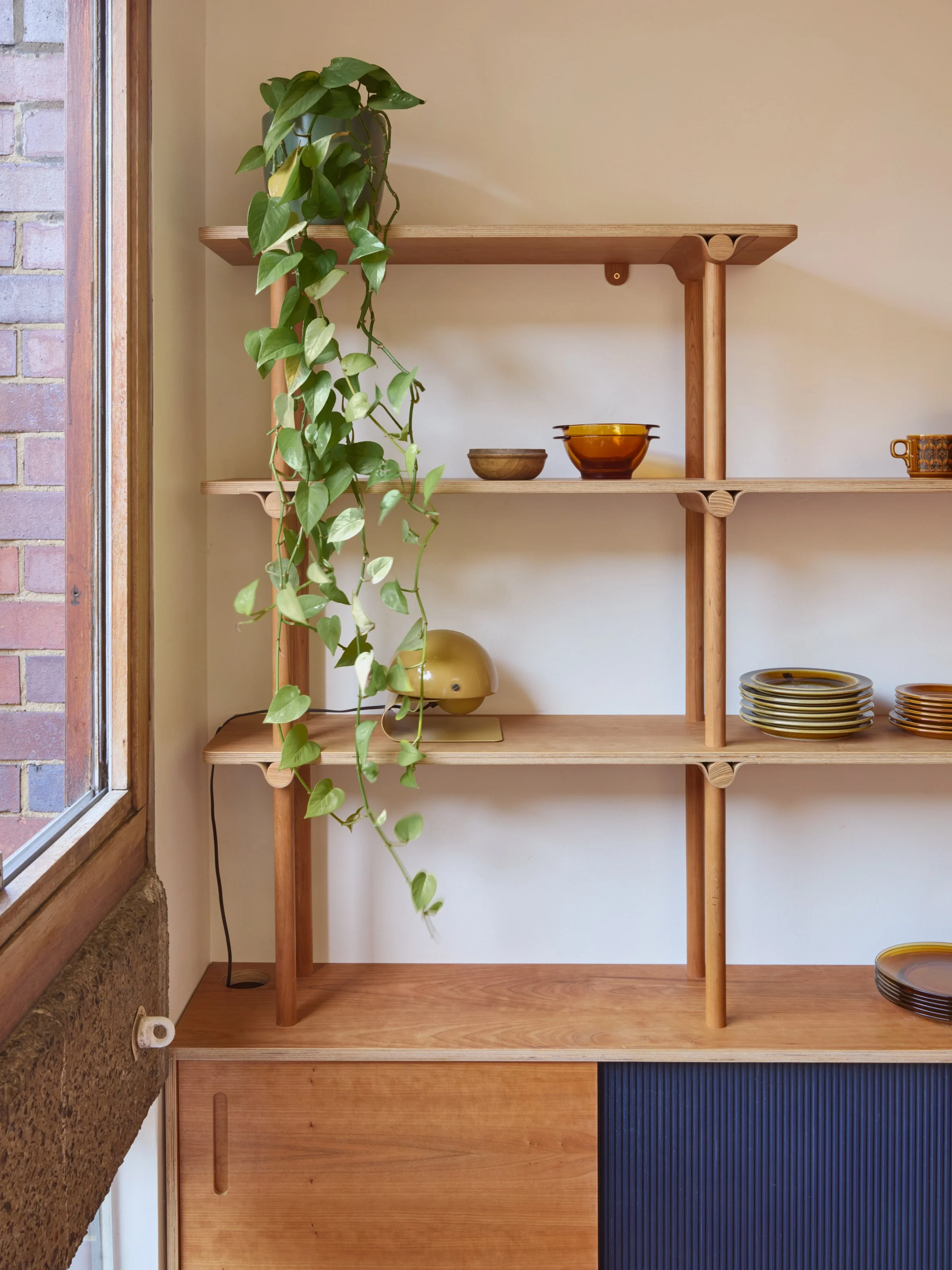
Adding a final touch of luxury, the shelving system is fully finished in cherry veneer on both the upper and lower sides of each shelf, unifying the overall aesthetic by moving away from our usual exposed birch finish on the underside.

A kitchen bridging past and present
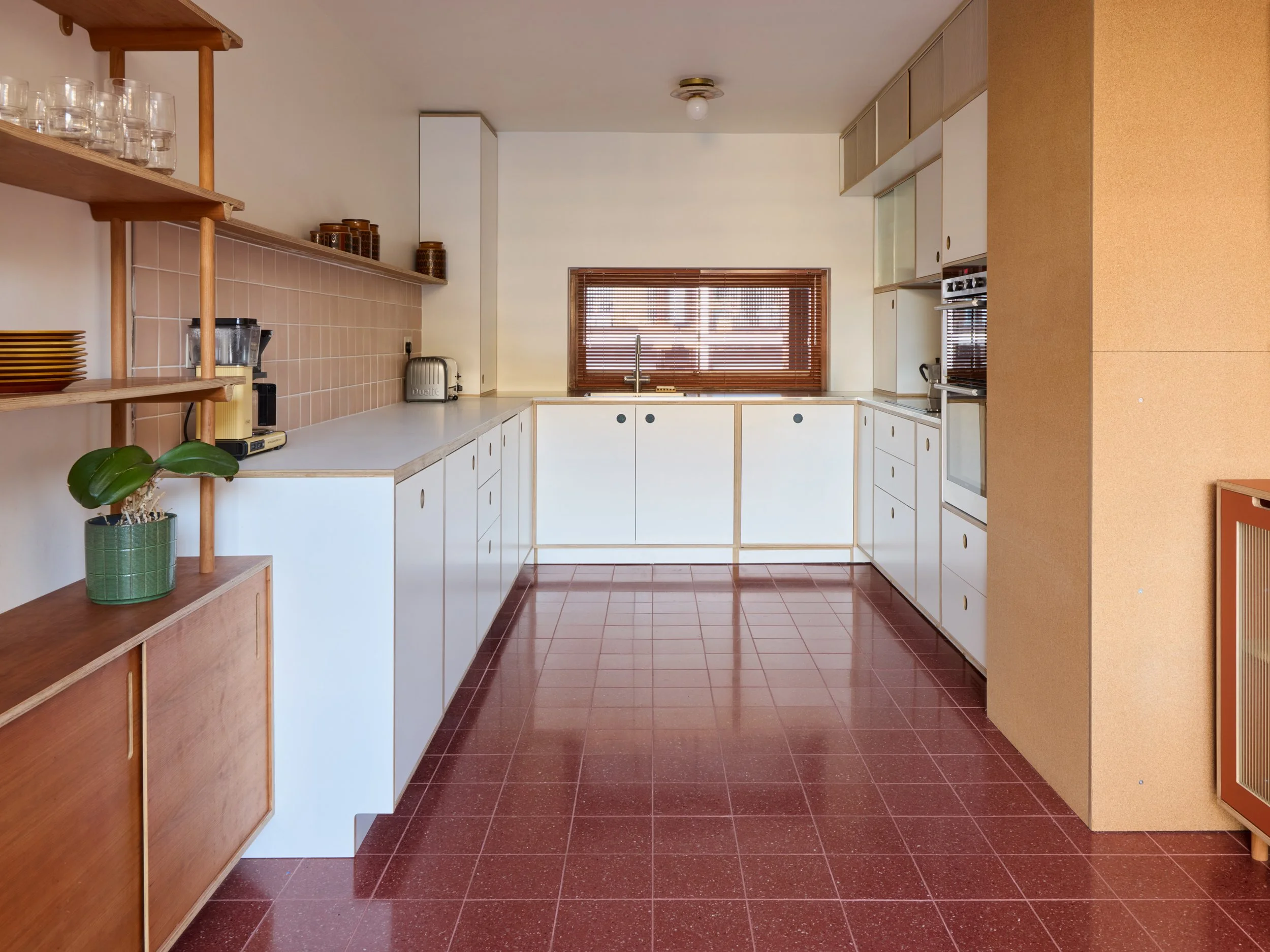
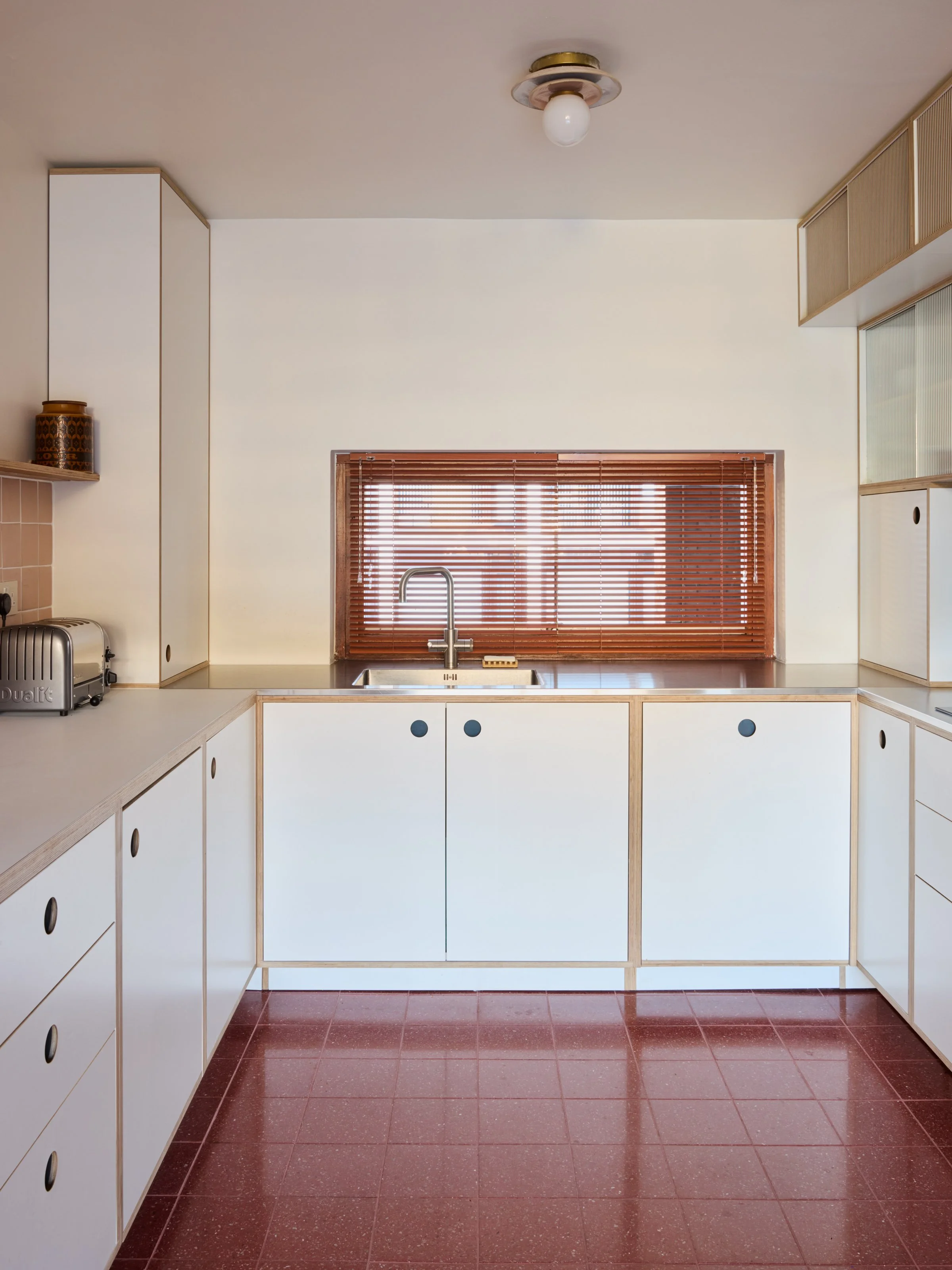
This kitchen, a boxy space nestled within a living room recess, presented challenges due to fixed bulkheads and a low ceiling. It was vital to keep the space airy while maximising storage, bringing in as much light as possible thanks to soft white laminate finishing throughout.
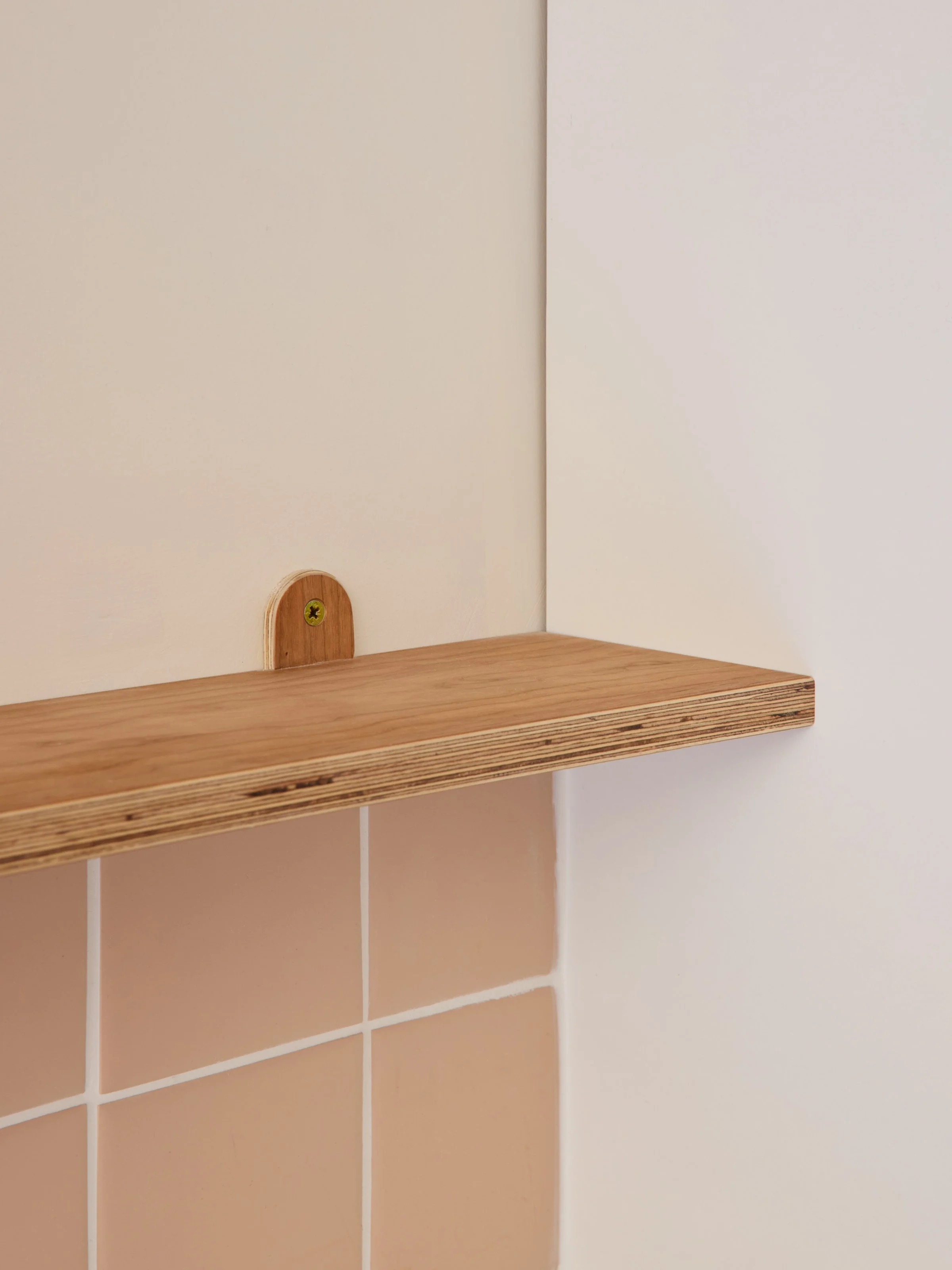
The right hand side of the kitchen was already boxed in between a corner and the walled service pipes, so we decided to concentrate all the appliances here and keep the left open with only lower cabinets and a narrow, clutter-discouraging shelf. Lacking space for a fitted fridge-freezer, two under-counter appliances plus a pull-out fridge provided ample cold storage without needing complex planning permission to rewire the electrics.
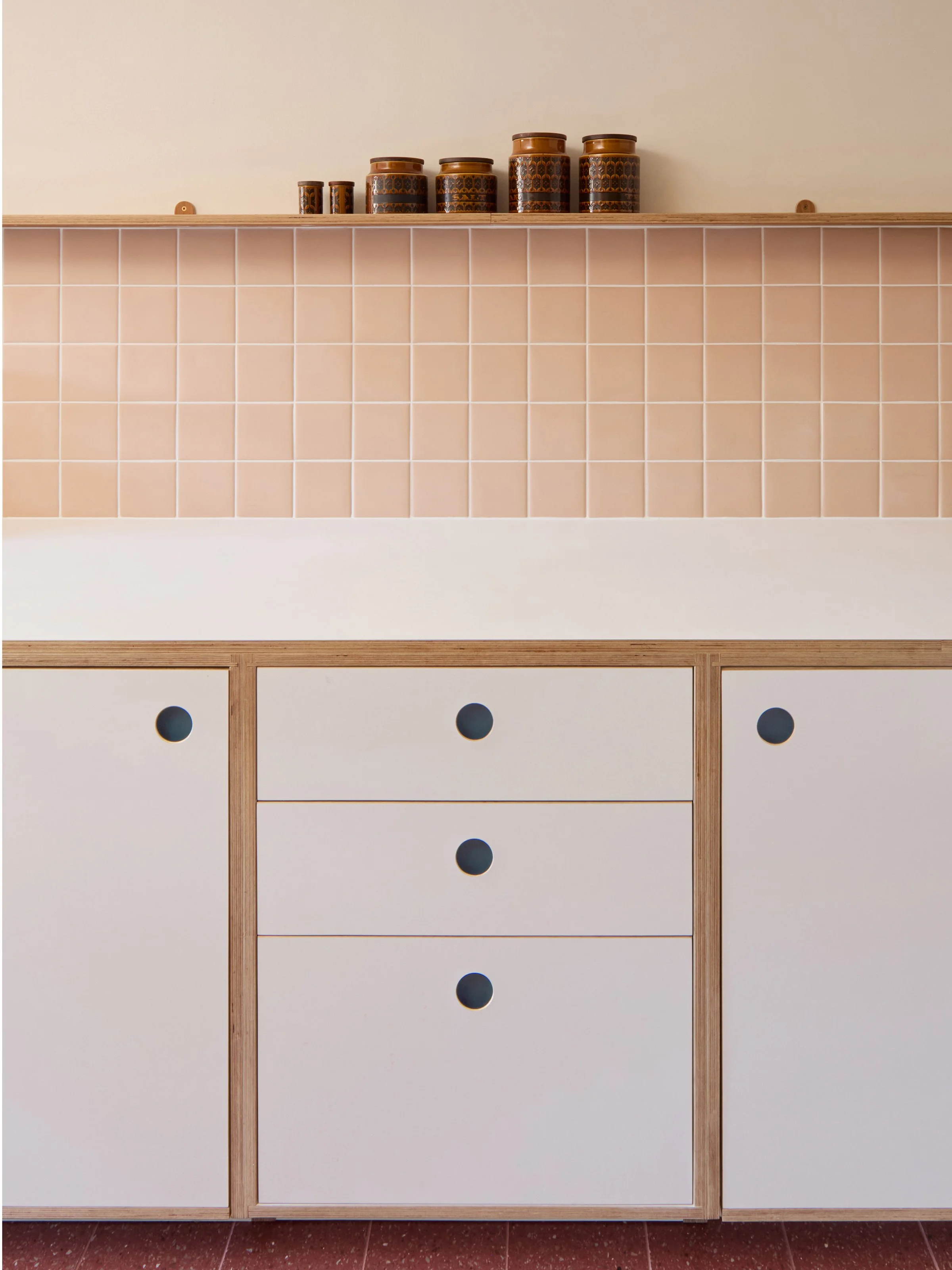
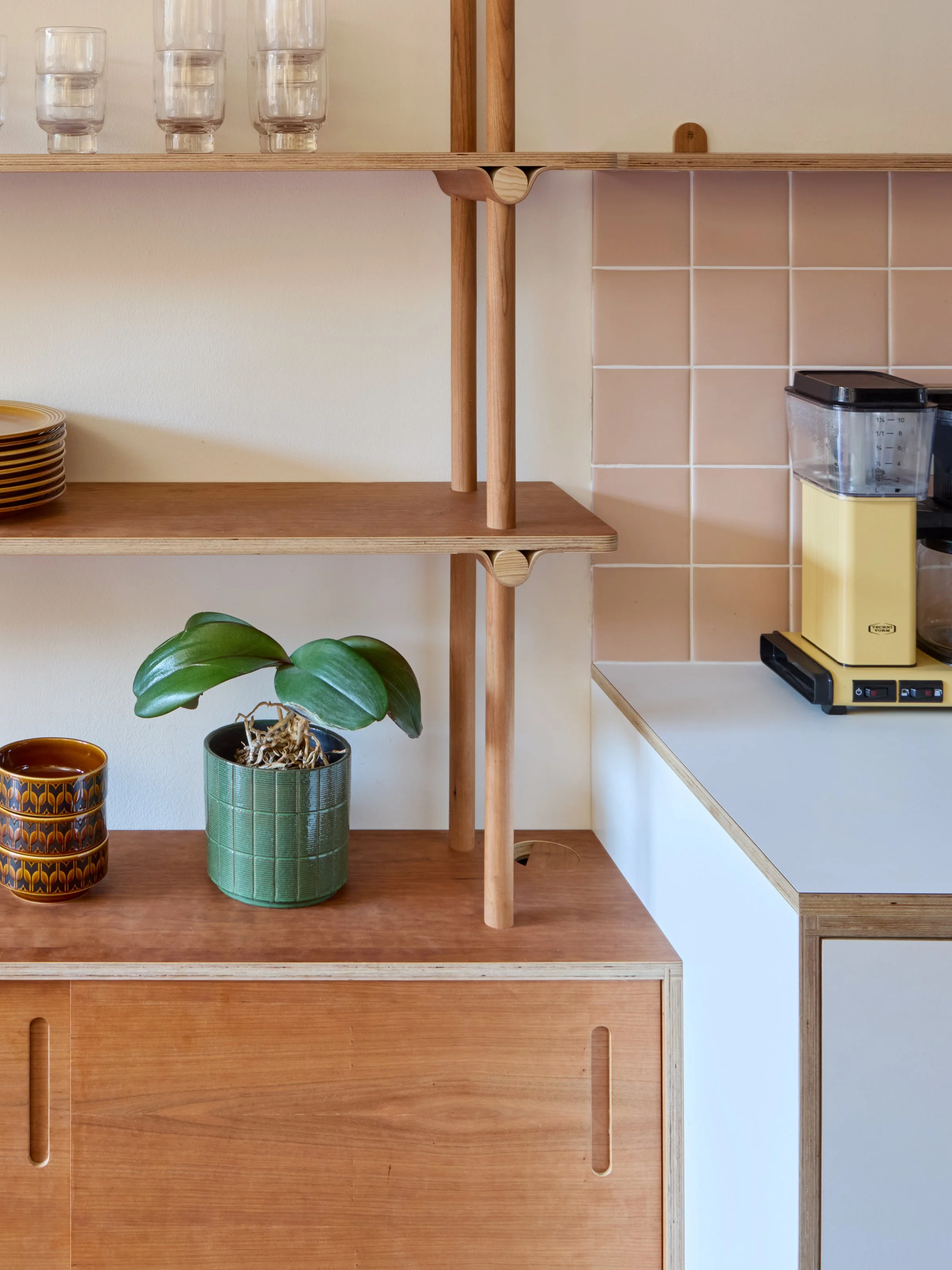
The design is a modern interpretation of the original 1960s space, with minimal layout changes showing the enduring quality of smart design. Key elements—including round handles, fluted glass, and stainless steel counters—are contemporary takes on features found in the original kitchen. A meticulous approach was taken with the cabinetry, which was precisely measured to align with appliances and tiles, eliminating awkward cuts and uneven finishes.
A considered focus point
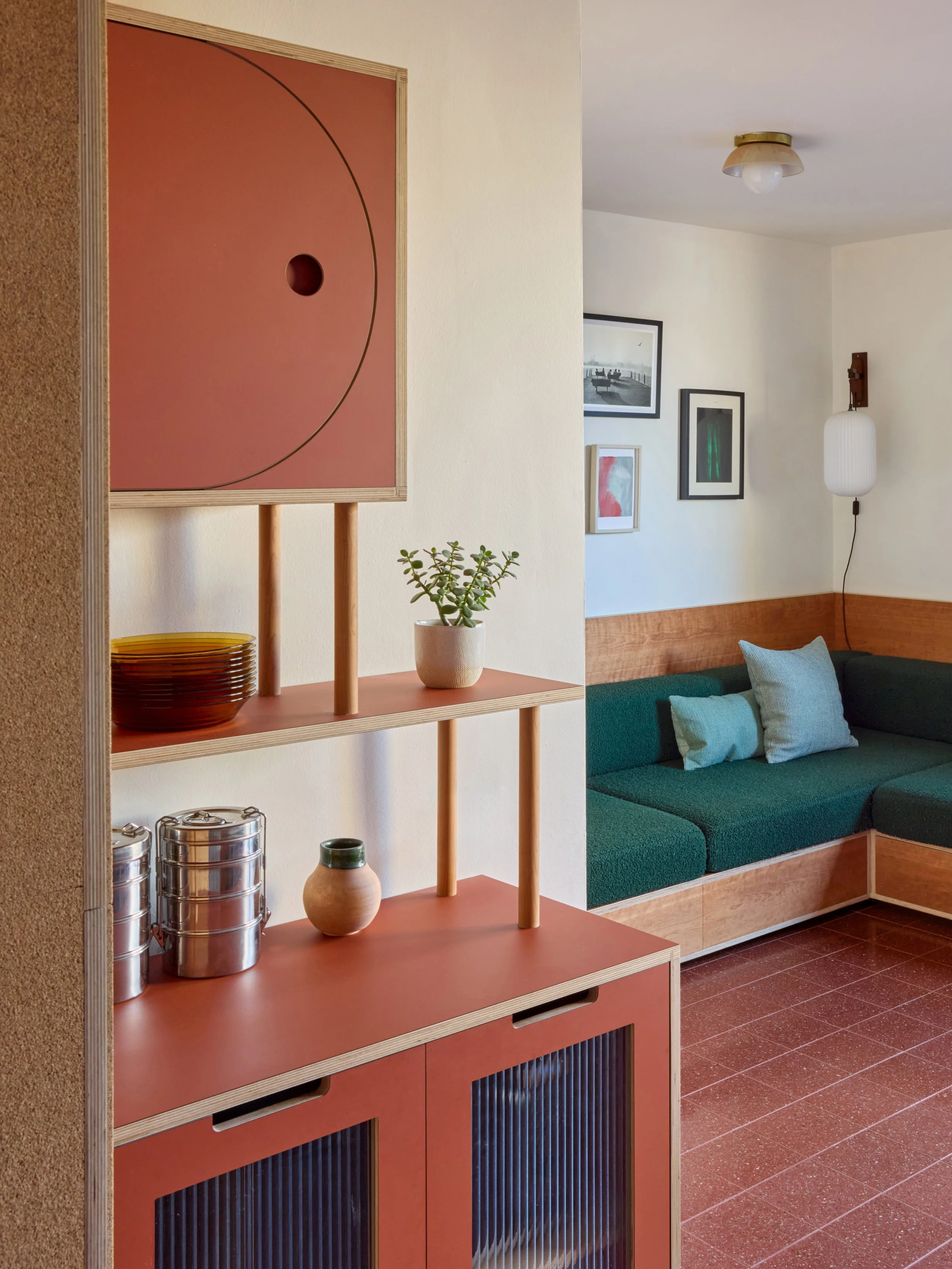
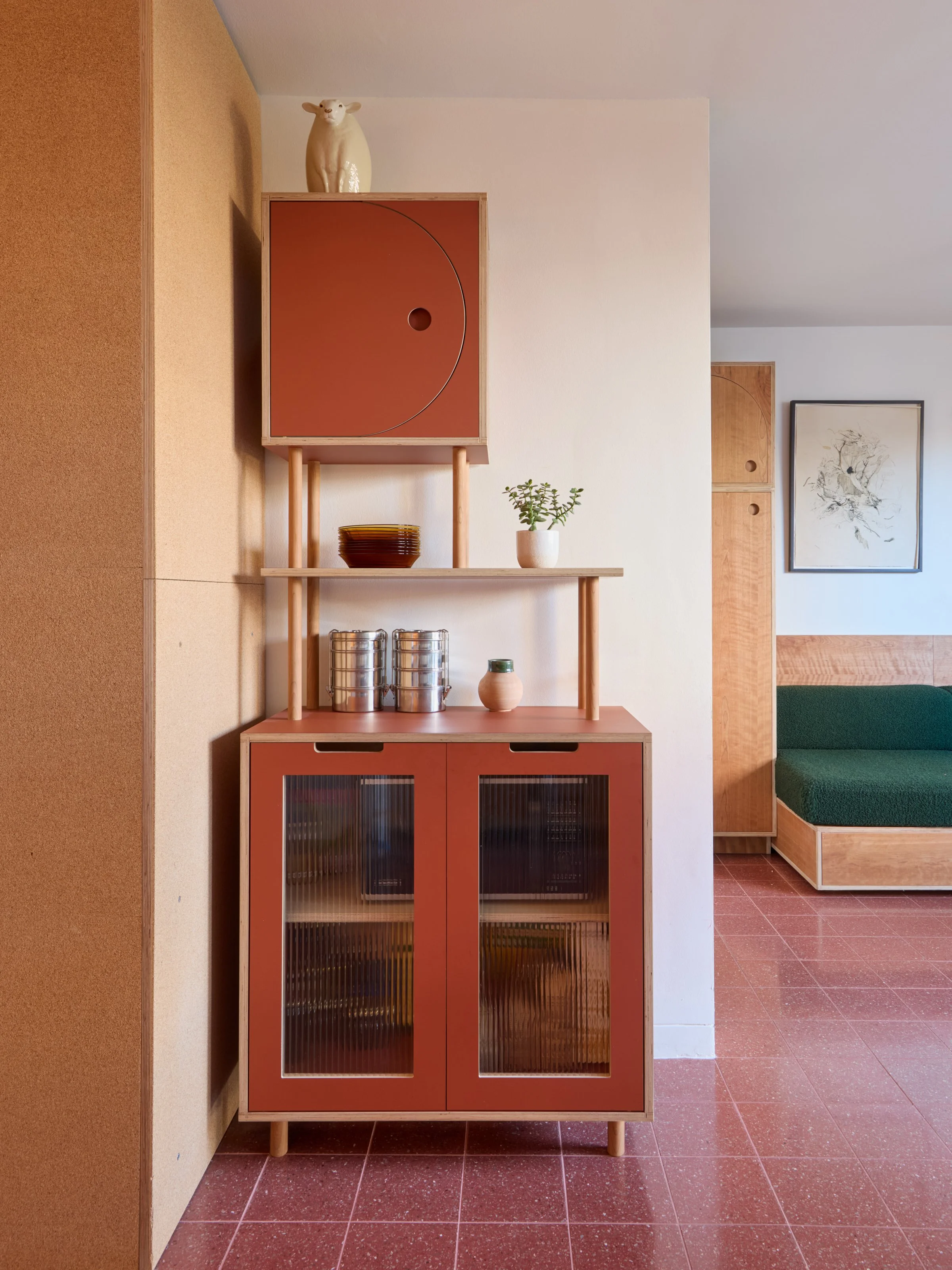
A central point to the whole space, the alcove between the service pipes and entrance needed to visually tie all three zones together without compromising on practicality. We clad this section in a soft cork surface, creating a floor-to-ceiling pinboard for children's artwork and allowing each area to flow into one another seamlessly.
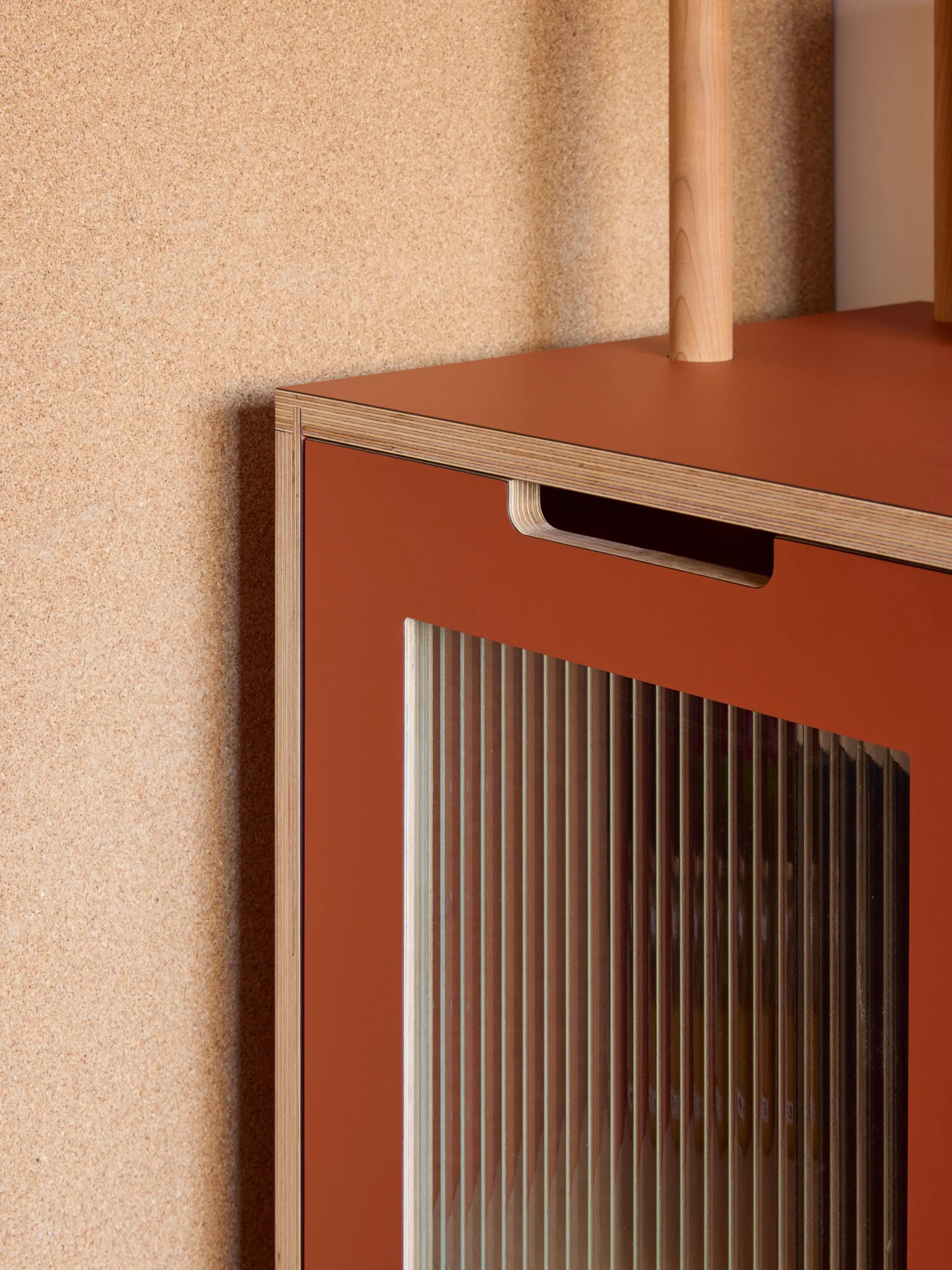
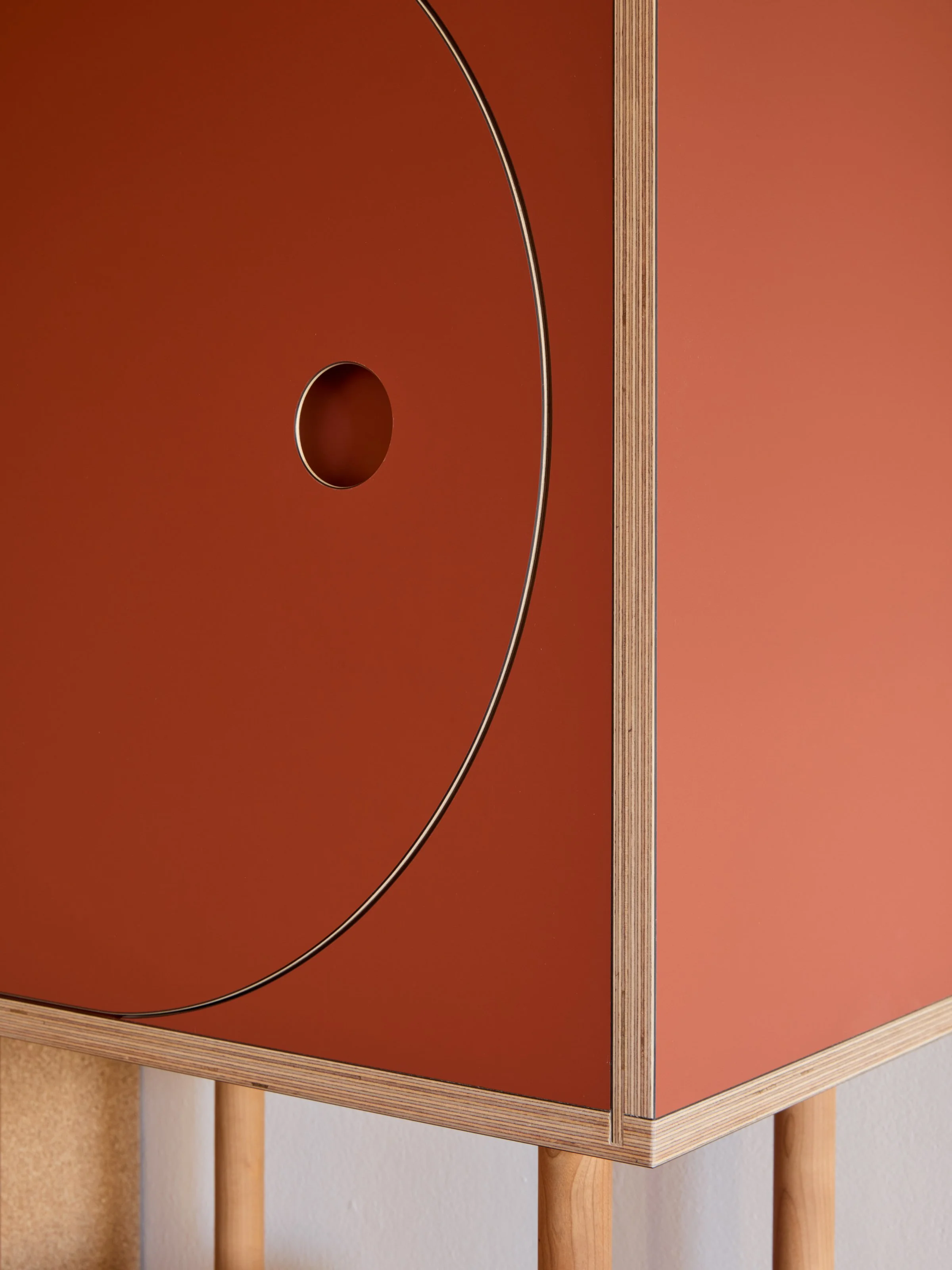
A red standalone cabinet completes this transitional space. It incorporates key details from each zone—cherry dowels, sleek laminate, and etched curve detailing—bringing the whole space together and adding extra storage for small appliances.
Japandi Seating
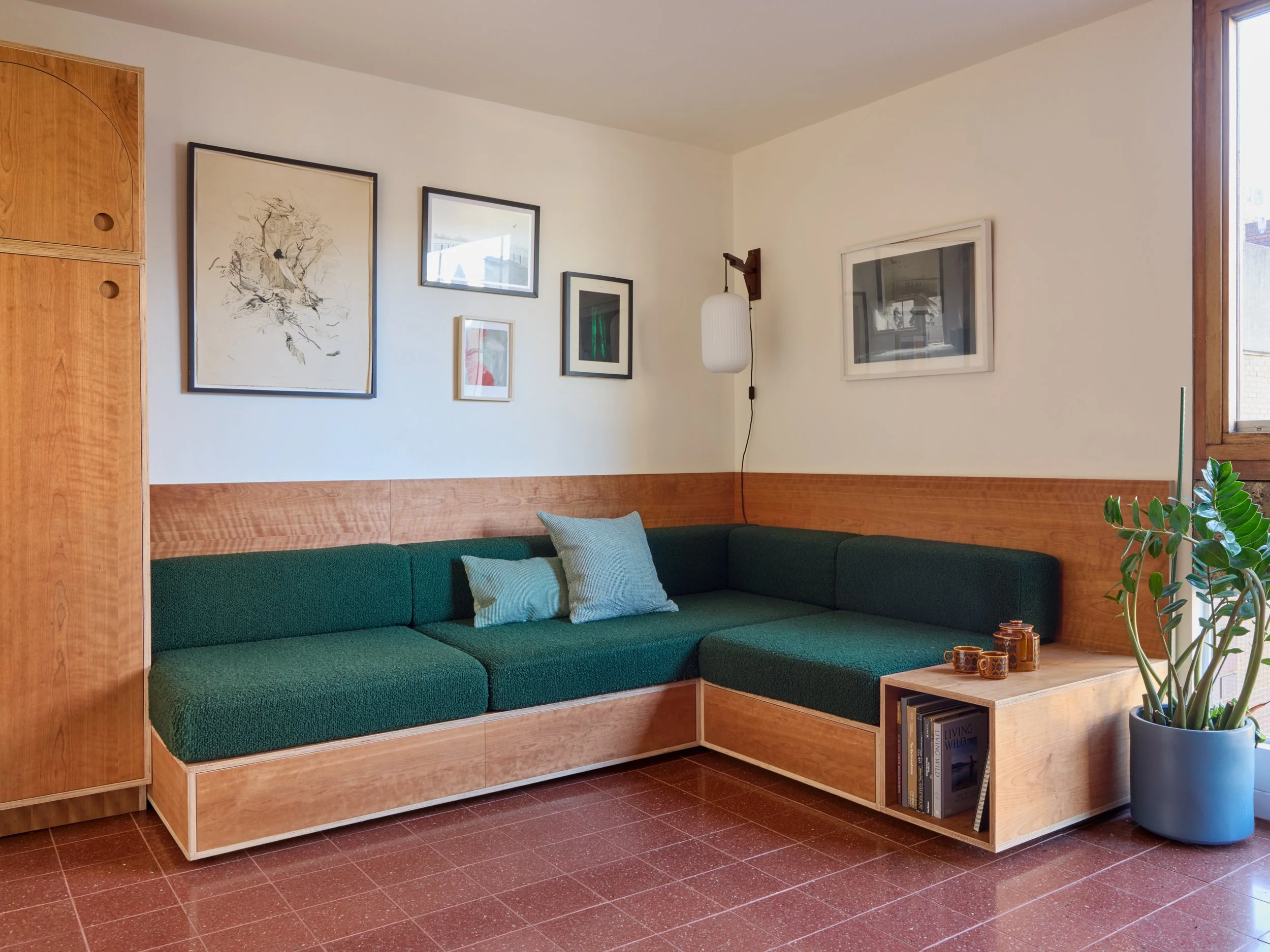
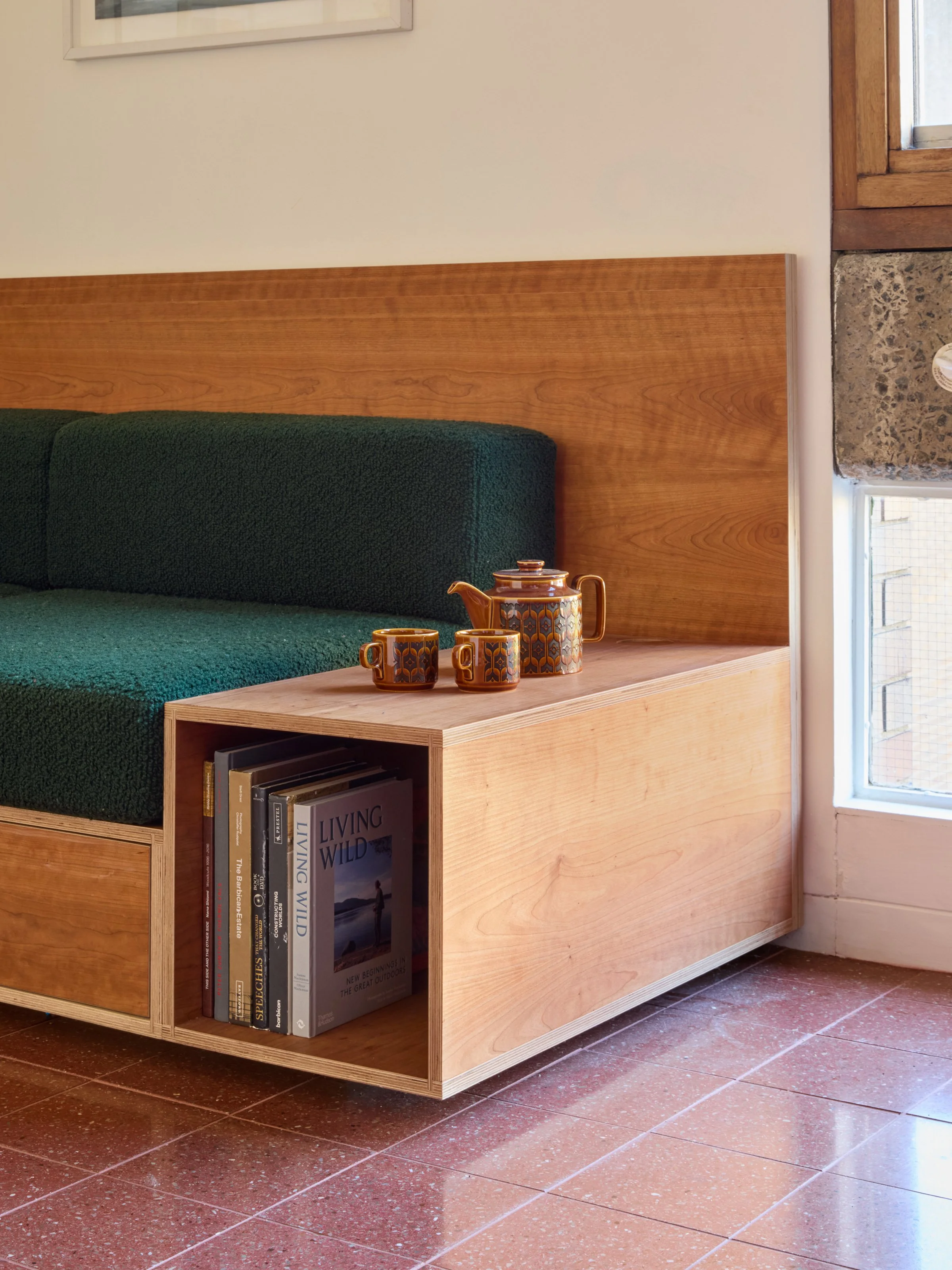
Inspired by Japanese 'low living' and the room's low ceilings, we designed the seating area with a deep but low sofa. Details were carefully aligned for cohesive flow: the sofa height matches the concrete window detailing and the inbuilt coffee table matches the height of the sofa cushions.
As a crucial family area, the space needed to be adaptable. Ample under-seat storage for children's toys allows for quick tidying, effortlessly transitioning the space into a relaxing adult retreat in the evenings.
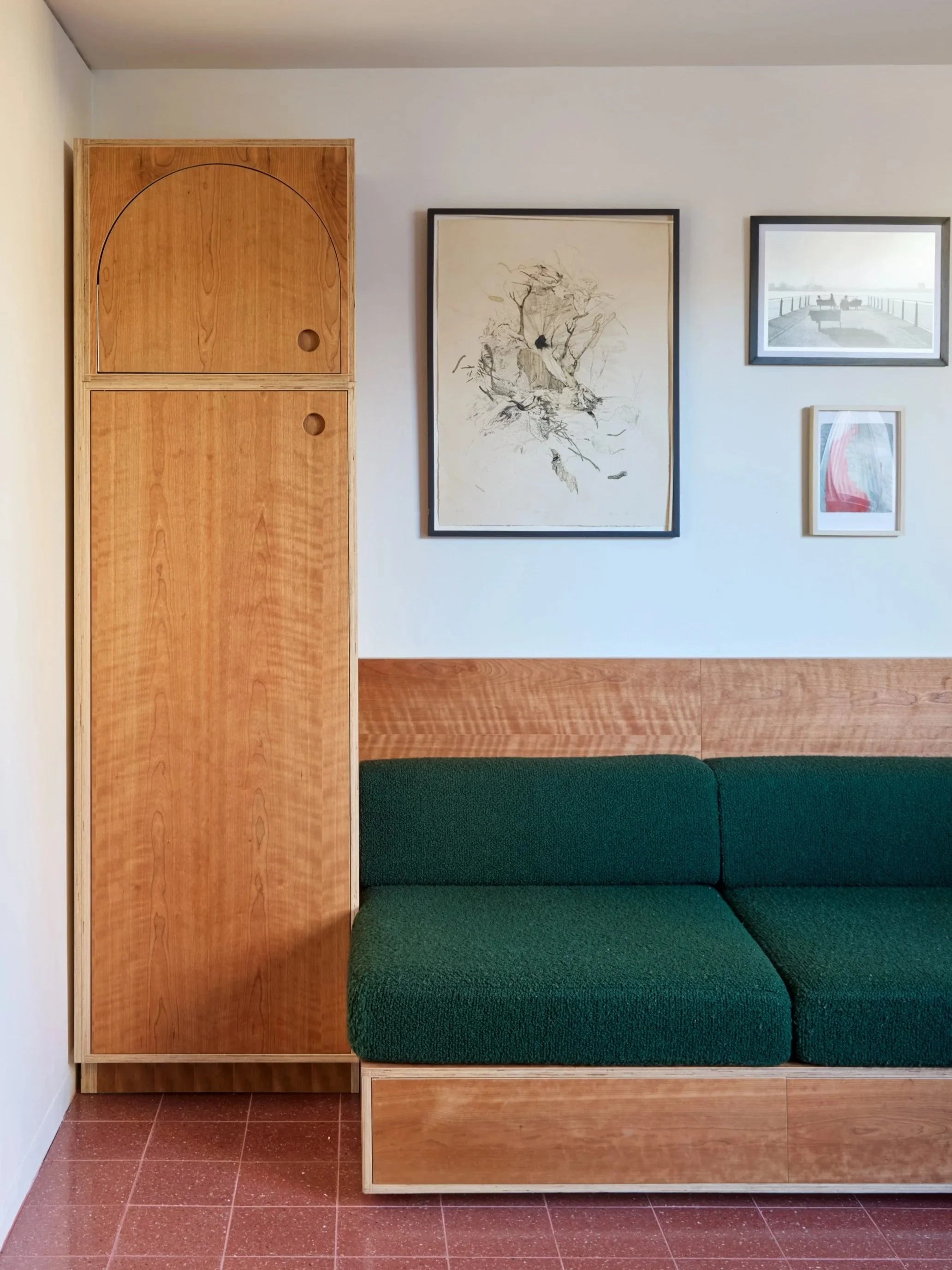
The tall corner unit, ideal for bulkier storage, features round handles and an etched curve mirroring the Barbican's iconic curved roof visible outside. Finished in dark, warm cherry wood and forest green boucle fabric, the area offers a luxurious, calm contrast to the rest of the home.
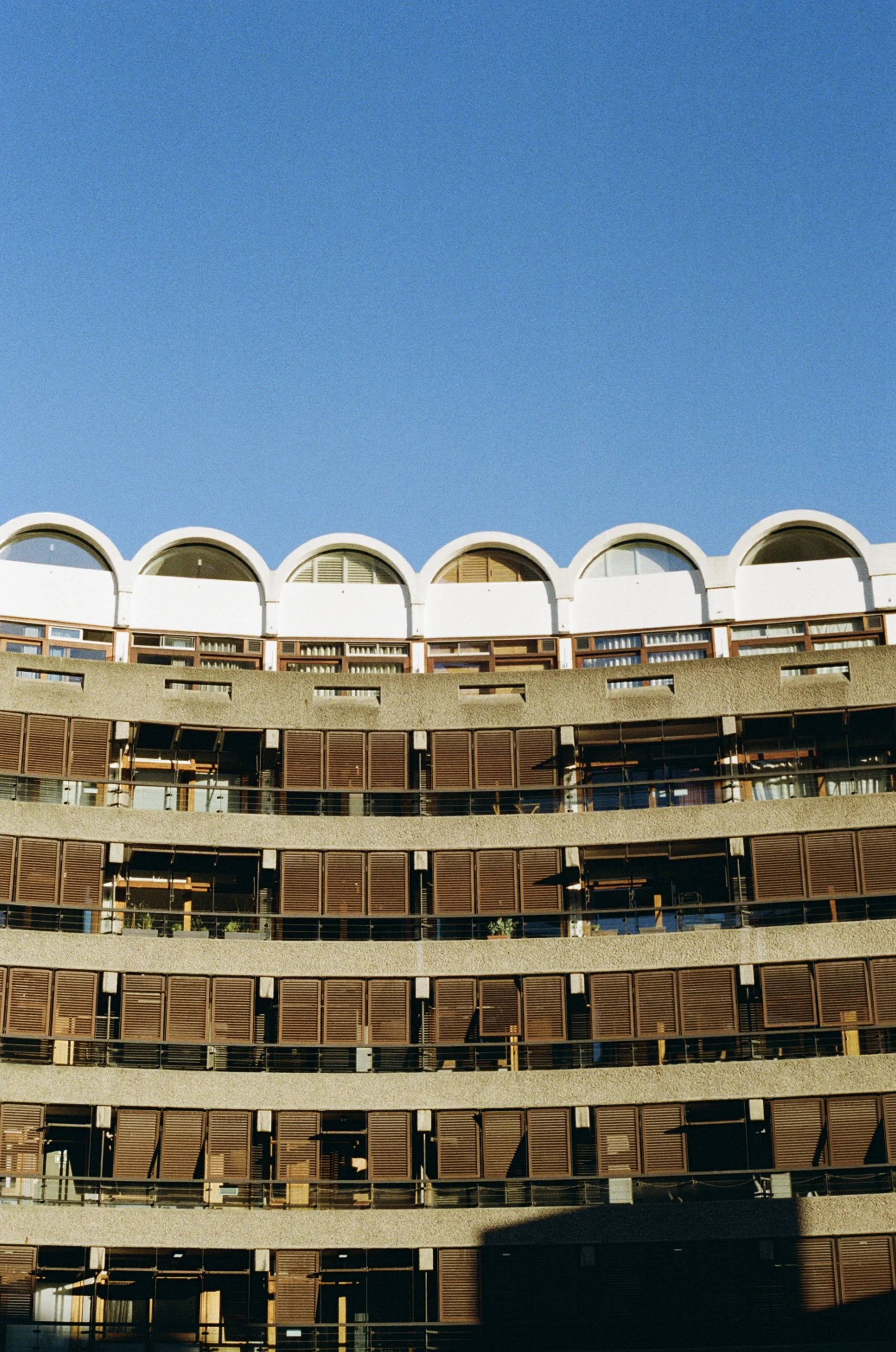
Fully embracing the Barbican’s unique architectural energy, Larissa’s home has been transformed into a welcoming and versatile family hub, re-imagined to accommodate every part of the family's daily life.
-
Please find our guided pricing here
Each project varies depending on the size of your home, the complexity of the design and your choice of materials and finishes.
-
Fully bespoke kitchen in white laminate
Corner seating with built in storage and green cushions made in collaboration with Shoreditch Design Rooms
Sideboard with open plan shelving
Corner storage cabinet in red laminate
Design and development with our in-house designer-makers
Making, by our own team of makers on Hackney Road
Delivery and installation by the same team of makers
-
Any home accessories shown | decoration | electrics | plumbing | removal of any existing cabinetry or furniture
-
After submitting your enquiry and confirming a quote that suits your budget, you'll be allocated one of our highly skilled designer-makers and they will schedule a site visit, where relevant. Based on your requirements and personal style, we'll provide a digital 2-D design to visualise the project outcome. Your designer-maker will ensure the experience is stress-free, supporting important design decisions and providing tailored, design-led solutions. All Lozi furniture is then made in-house and if appropriate, carefully installed by the designer-maker and workshop team.
Click here for a full breakdown of each stage.